Post WW2 Escape & Evasion
Post-WW2 Escapers, Evaders and Resistance
Korea · Vietnam · Falkland Islands · Gulf War · Sierra Leone
Across the second half of the twentieth century, servicemen and civilians continued the tradition of escape lines—surviving interrogations, relying on helpers and using ingenuity to get home. These snapshots highlight how the lessons of WW2 carried forward into new conflicts.
Korea
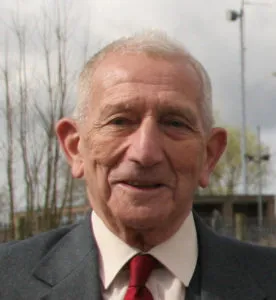
Major David Sharp BEM, ELMS President and Korean War escaper.
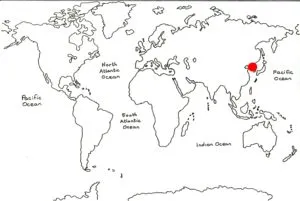
Sharp served on US partisan missions deep inside North Korea.
Only a handful of Allied soldiers escaped captivity during the Korean War (1950–1953). Among them was ELMS President Major David Sharp, one of five British special operators quietly embedded with UN partisan units. After volunteering for behind-the-lines intelligence work in 1950, Sharp was wounded and captured at the Battle of the Imjin River while blocking a Chinese road march.
His captivity became a test of endurance. Interrogations, a 300-mile “death march,” and mock executions were used to force information, yet Sharp attempted escape at the first opportunity—lasting four days on the run before recapture. Later, in the bunker at Mun-Hari, he and fellow partisan Lieutenant Leo Adams-Acton conspired again, sustaining morale through covert communication even while bound and isolated.
Spot the decorations: Can you identify the campaign and bravery medals on Sharp’s ribbon bar?
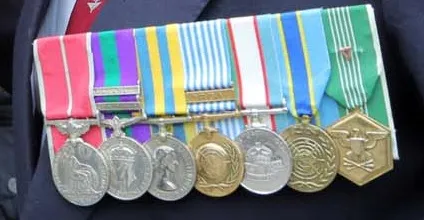
Transferred between penal camps and a Korean jail, Sharp faced tribunal charges as an “intelligence agent” and “disturbing element.” Adams-Acton was executed in July 1953, the month the armistice was signed. Sharp, released on 6 September 1953, became the last British POW handed back by Chinese guards. His service earned the British Empire Medal and the Korean Partisan Honour Medal; Adams-Acton received the Military Cross posthumously.
Vietnam
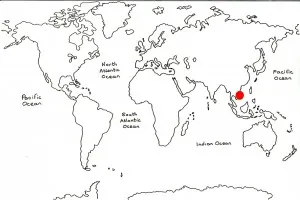
Terrain and climate made evasion in Vietnam brutally difficult.
During the Vietnam War more than 80 escape attempts were recorded among American POWs. Isaac Camacho became the first to make it home, slipping away during a monsoon night in July 1965. Every successful escape occurred in the south of the country, where dense jungles offered concealment and access to friendly units.
Breaking out, however, was only half the battle. Recaptured escapers endured severe reprisals—beatings, torture and, in some cases, death from injuries. Language barriers and cultural differences made it dangerous to seek help from local villagers. Duane Martin escaped twice, each time evading for a fortnight; on his second attempt he was killed by civilians who feared retaliation. The Vietnam experience underlined how much evaders depended on reliable helpers and intelligence networks.
Falkland Islands
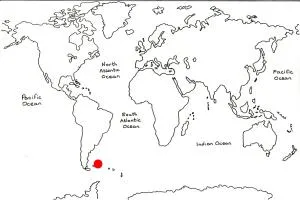
Sea Harriers provided close air support during the 1982 campaign.
On 27 May 1982 Squadron Leader Bob Iveson and Flight Lieutenant Hare flew multiple low-level passes to support 2nd Battalion, The Parachute Regiment. Anti-aircraft fire struck Iveson’s Harrier on the third run, forcing him to eject at barely 100 feet. Alone, without his survival kit, he hid in an abandoned farmhouse, scavenging supplies and evading patrols for three days before 2 Para reached him near Goose Green.
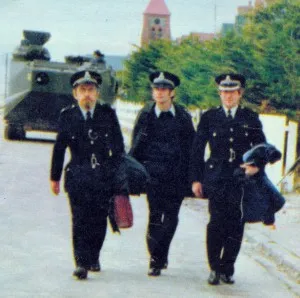
Constable Fred Clark (left) and colleagues after the liberation of Stanley.
Islanders mirrored wartime resistance tactics—swapping scarce food, relaying intelligence and conducting “mild sabotage.” Telephone lines laid above ground proved tempting targets for locals Fred Clark and Steve Whitley, who quietly cut and rejoined wires to slow Argentine communications.
“We felt better for doing something, no matter how small… Sometimes it was a more useful job—you’d stand smoking while a friend snapped photos of installations from under your arm.” — Fred Clark
“It was great fun… I even started sticking the two ends together so it looked as if they’d been repaired.” — Fred Clark
The resilience shown in these conflicts keeps the spirit of the escape lines alive for new generations.
Their efforts, like the Resistance organisations of WW2, distracted occupying forces and kept morale high. Intelligence gathered by civilians proved vital to the British task force advancing across East Falkland.
Gulf War
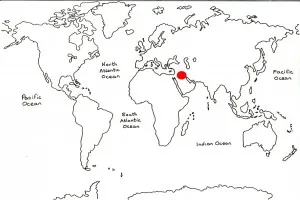
Special Forces patrols faced immense distances and extreme temperatures.
The SAS patrol Bravo Two Zero became one of the Gulf War’s most studied escape and evasion cases. Inserted deep behind Iraqi lines in January 1991, the eight-man team was compromised by a shepherd. A firefight followed, and the patrol split in the chaos.
With limited water and no vehicles, the desert proved as lethal as enemy troops. Three men from the main group were captured, one killed in action and another succumbed to hypothermia. The detached three-man element fared little better—one captured, one dead from exposure. The final survivor chose a last stand against two trucks, exhausting his ammunition before slipping away on foot. Travelling by night, he covered nearly 200 miles in eight days, finally reaching Syria with help from local civilians—the lone evader to make it home.
Sierra Leone
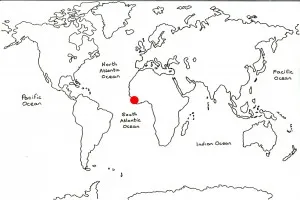
UN peacekeepers navigated jungle terrain, rebel checkpoints and dwindling supplies.
In 2000 Sierra Leone’s civil war trapped Major Phil Ashby and three fellow UN observers inside a besieged compound alongside 70 Kenyan peacekeepers. Ammunition, food and water dwindled while rebels demanded the surrender of the four Western officers.
At 3 a.m. the team scaled a blind spot in the mud-brick wall and vanished into the jungle with almost no supplies. Narrowly avoiding patrols, they relied on a teenage guide, Alusayne, to skirt rebel positions and reach UN-held Mile 91, some 50 miles away. A final satellite phone call—made with the last of their battery—prompted a Guinean escort and RAF helicopter evacuation. Their escape drew directly on WW2 evasion doctrine: night movement, local guides, strict noise discipline and absolute trust within the team.